


































































Let’s be honest: Alpine is easily one of the most visually stunning maps in Counter-Strike history. Set in a breathtaking, snowy high-altitude mountain resort, it’s a massive breath of fresh air compared to the dusty alleys of Mirage or the industrial grids of Inferno.
But looks don’t win premier matches. Officially added by Valve to the Competitive, Casual, and Deathmatch rotations alongside Warden and Stronghold, Alpine is a hostage rescue map (cs_alpine) featuring extreme verticality, similar in height dynamics to Vertigo, tight choke points, and lightning-fast rotation times. If your team is still yelling “he’s over there!”, “behind the snow box!”, or “somewhere in the middle!”, you’re throwing winnable rounds.
This ultimate CS2 Alpine callouts guide will teach you every critical position, help you lock down mid control, and elevate your squad’s communication from rookie level to Global Elite.
Why Alpine Callouts Can Make or Break Your Match
Unlike traditional defusal maps where teams fight over open bomb sites, Alpine completely flips the script. The Terrorists are the defenders holding the hostages, and the Counter-Terrorists must execute heavy pushes to extract them.
Because of this structure, missing a callout means a defender can loop through an interior connector and catch your entire rescue line from behind before you even finish reloading.
Clear comms on Alpine allow your squad to:
- Predict Fast Flanks: Shut down defenders using the tight mountain pathways. If you want to see how these rotation strategies contrast with defusal maps, look at our Nuke callouts guide.
- Establish Crossfires: Set up lethal traps around the high-traffic choke points.
- Master the Map Quirks: Call out players trying to exploit the unique Snow Footsteps mechanic. Walking on the open Snow Path creates a distinct, loud crunching sound mask that can be heard clearly from inside the indoor zones.
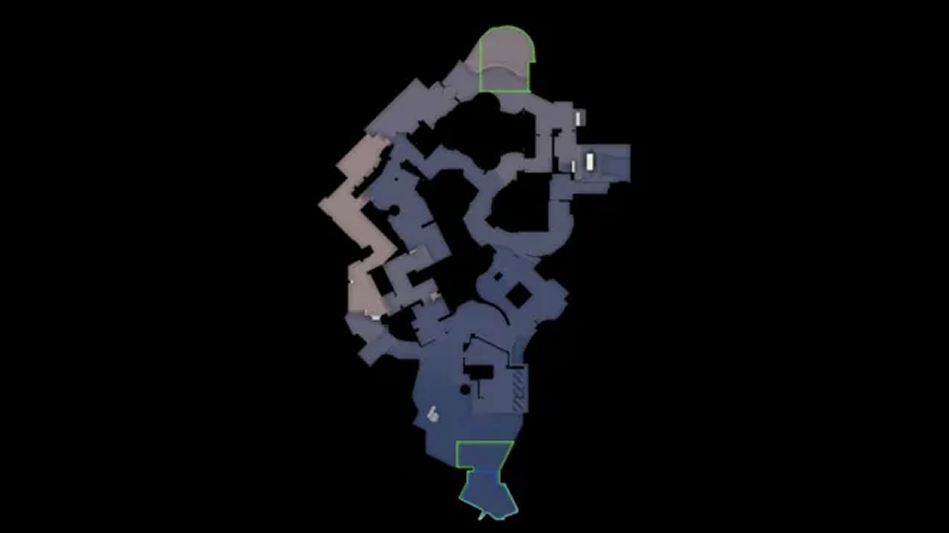
Map Overview: Spatial Zones
To give you a quick bird’s-eye view before we dive into the specific tactical dirt, here is how Alpine breaks down geographically:
| Map Zone | Tactical Profile | Engagement Style |
| A Zone | Open hostage zone with vertical elevations | Long-range duel heavy (AWP heaven) |
| B Zone | Cramped, interior-heavy layouts with tight corners | Fast executes, SMG/Shotgun friendly |
| Mid Control | The core hub connecting both major zones | Highly contested utility battlefield |
| Spawn Areas | Fast rotation hubs for both factions | Movement-heavy re-takes and saves |
CS2 Alpine Callouts: The Complete Breakdown
1. A Zone Callouts
The A Zone is notoriously open, giving long-range riflers and AWPers an absolute field day. Watch out for the vertical line-of-sight choke between Heaven and the ramp elevated defenders have a pixel-perfect sightline on CT heads here. For a broader look at managing these kinds of sightlines, check out our CS2 map guide.
- A Site: The primary, open hostage zone where the main extraction/holding area sits.
- A Ramp: The main incline pathway attackers use to force their way into the A side.
- Snow Box: A large, frozen crate near the default hold area that serves as the most common piece of hard cover.
- Back A: A deep, defensive anchor position hidden behind the main site area perfect for crossfires.
- Heaven: The highly elevated platform overlooking the entire site. Holding Heaven with an AWP is practically a cheat code if your team has a crossfire set up below.
- A Connector: The fast-track corridor linking the middle of the map straight into the A site.
- Ski Lift / Cable Car: The physical resort structures outside A Ramp used by CTs to hide early-round aggression.
2. Mid Control Callouts
Just like maps like Anubis or Overpass, he who controls Mid controls the pace of the round. Letting the enemy team roam free in Mid cuts your rotation lines in half. If you enjoy mid-heavy maps, check out our Dust 2 callouts to see how similar map control concepts work.
- Mid: The central, open battle area where early-round utility usually flies.
- Mid Boxes: Scattered crates in the main middle lane used for early-round peeks or taking cover.
- Window (Sniper Nest): An elevated, defensive sniper nest peeking right into the center of Mid.
- Connector: The crucial junction linking Mid directly to both side zones.
- Snow Path: An open, unroofed rotation path running parallel to the main mid-section.
- Balcony Bridge: The elevated walkway linking the upper levels of the resort directly to Mid Control.
3. B Zone Callouts
If A is an AWPer’s paradise, B is an entry-fragger’s dream. It is compact, chaotic, and demands perfect pre-aiming.
- B Site: The tighter, interior hostage zone. Expect fast executes and heavy grenade usage here.
- B Main: The primary chokepoint and entry corridor that attackers charge through to hit B.
- B Hut: A tight, wooden indoor structure providing close-quarters cover right off the main site.
- Fireplace: A critical deep corner inside B Hut where defenders love to camp with shotguns.
- Back B: The deepest defensive corner on the site—the ultimate anchor spot for holding tight angles.
- B Window: An elevated, high-ground window overlooking the main B site floor.
- B Connector: The direct rotation corridor leading right out of Mid into the B side.
4. Spawns & Rotation Routes
These spots are essential for anchoring late-round clutches, organizing retakes, or saving your weapon when a round falls apart.
- CT Spawn: The initial defensive starting area and the direct safety hub for hostage extraction.
- CT Stairs: A quick stairwell that allows defenders to rapidly flood into Mid at the start of a round.
- Heaven Connector: A specific high-ground bridge corridor connecting Heaven A directly toward the CT side.
- Back Spawn: A safe, deep repositioning area behind the initial CT spawn zone.
Master Alpine Callouts: Full Reference Table
Bookmark this table or keep it open on your second monitor during your next Premier match. These are the exact terms high-ranked stacks use to coordinate map movements.
| Map Sector | Primary Callouts | Common Secondary/Alternative Names |
| A Side | A Ramp, A Site, Heaven, Snow Box, Ski Lift | Back A, Long A, Ice Box |
| Mid Control | Mid, Window, Connector, Mid Boxes, Balcony Bridge | Snow Path, Top Mid, Sniper Nest |
| B Side | B Main, B Site, Hut, Back B, Fireplace | B Window, B Connector, Wood Hut |
| Rotations | CT Spawn, CT Stairs, Heaven Connector | Back Spawn, Main Stairs |
The Alpine Tactical Meta
Because Alpine features a completely open skybox with no height limits, executing strategies requires specialized utility. Counter-Terrorists can throw massive, high-altitude smoke grenades directly from CT Spawn over the resort roofs to block off Window and Heaven completely.
| Faction | Tactical Priority | Essential Utility Setup |
| Terrorists (Defenders) | Maintain crossfires between Heaven A and Window to shut down Mid. | Deep molotovs on A Ramp and B Main to stall the early clock. |
| Counter-Terrorists (Attackers) | Force visual isolation on Mid Boxes using smoke screens, then split toward B. | High-skybox smoke lineups to blind Sniper Nest / Window before pushing. |
How to Memorize Alpine Callouts Faster Than Your Competitors
You don’t need hundreds of hours on a map to learn its callouts. Use these quick steps to build instant muscle memory:
- Boot Up an Offline Practice Match: Fire up a local server without bots. Walk through the map slowly and call out every spot out loud as you cross it. If you want to check your grenade setups before queuing, you can also try custom CS2 practice maps.
- Keep Your Comms Short and Concise: In the heat of a gunfight, economy of language wins. Say “One Heaven A” instead of “Oh my god, there’s a guy up on the high platform!”
- Ditch Outdated Callouts: Don’t use weird community nicknames from old pre-release workshop versions that confuse your teammates. Stick to the official standard callouts listed above.
If you’re completely fresh to the game or just returned to the active pool, it might be worth brushing up on our comprehensive CS2 beginner guide before diving deep into complex Alpine site strategies. Once your squad starts speaking the same language, you can take these communication skills to other battlegrounds by checking out our complete CS2 maps guide.