









































































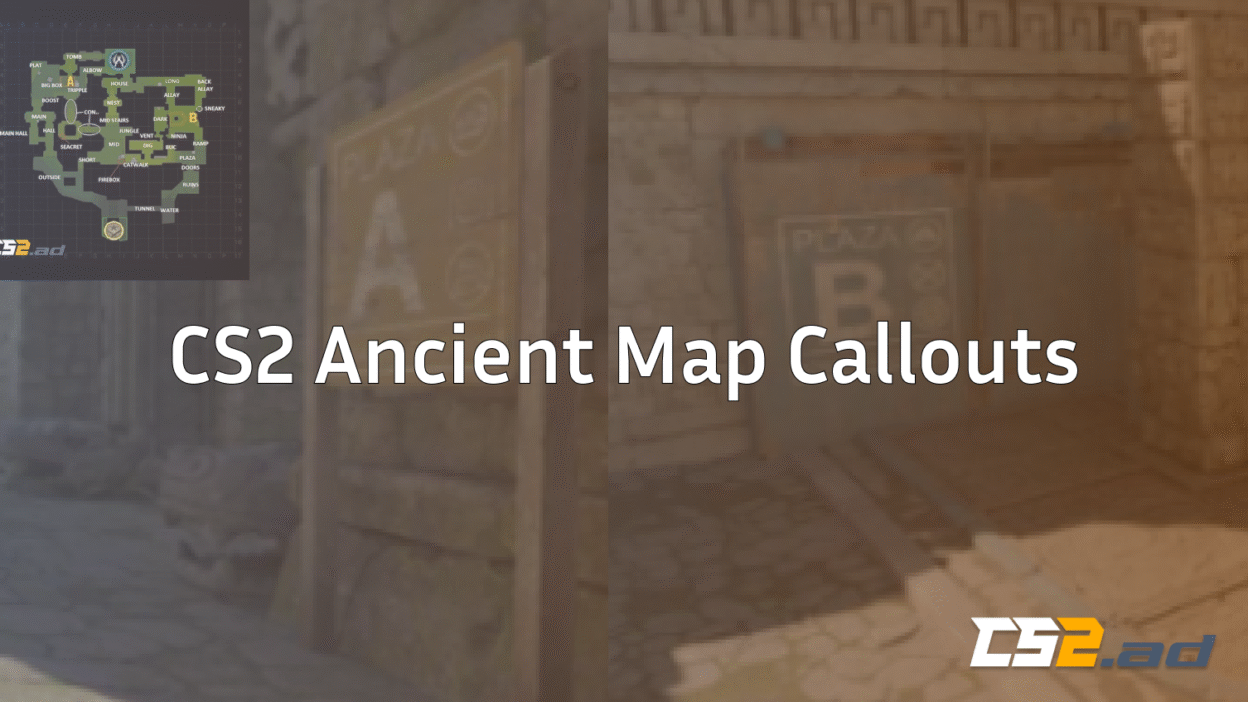
If you’re climbing the ranks in CS2, mastering map callouts is non-negotiable. Ancient is one of the most strategically complex maps, and knowing the right terms for each location can make the difference between winning and losing. Whether you’re a beginner or an aspiring pro, this guide will walk you through every important Ancient callouts CS2, Ancient map callouts, and CS2 Ancient callouts you need.
Overview of Ancient Map
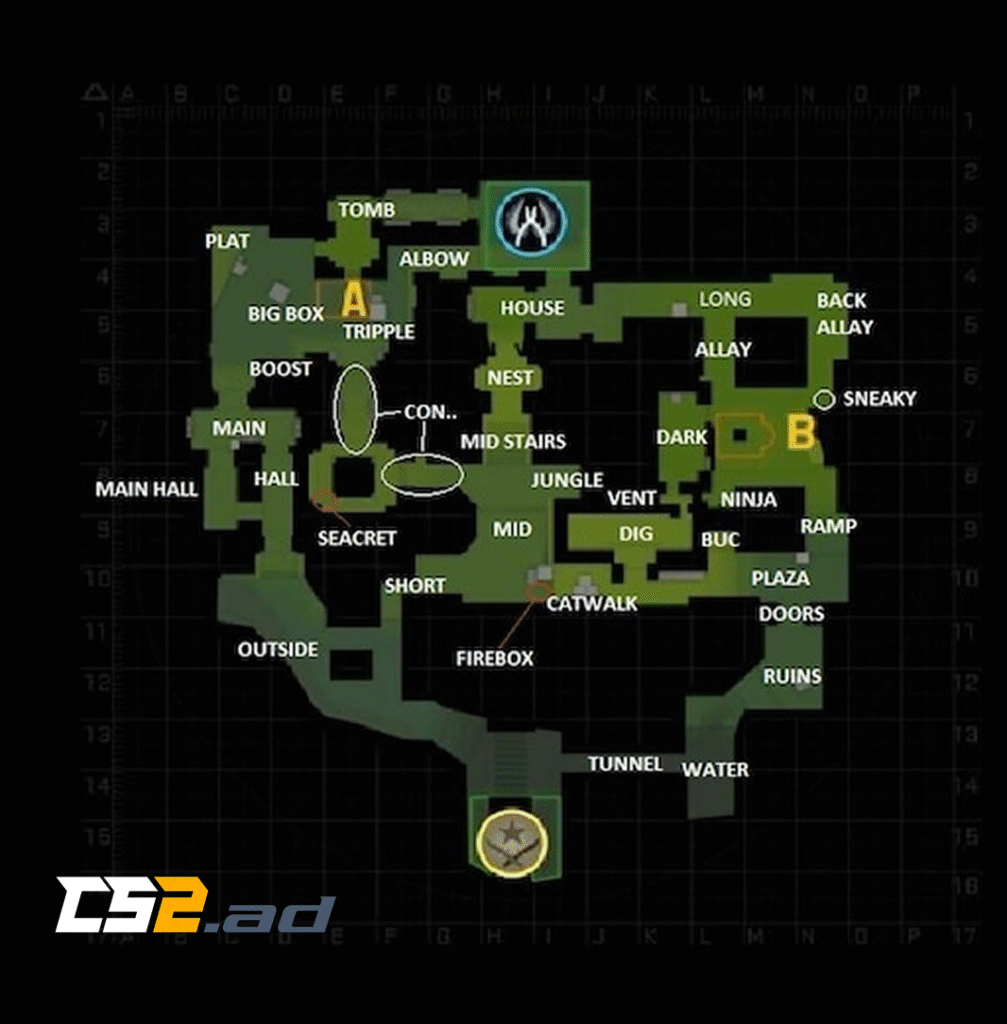
Ancient is a classic map reimagined in CS2. Its layout is tight, with narrow choke points and layered bomb sites, making communication essential. Players who know the callouts can relay enemy positions quickly, allowing their team to rotate efficiently.
Key areas include:
- A Site – Typically has a central bomb plant area, close entrances, and flank paths.
- B Site – Compact with vertical angles and multiple access points.
- Middle / Connector – Often the most contested region, controlling rotations.
- Banana / Ruins / Cave – Unique pathways that require map knowledge for rotations and utility usage.
For comparison, you can also see our guides on Train callouts, Nuke callouts, and Mirage callouts to improve your general map awareness.
T-Side Callouts
As a Terrorist, knowing these callouts ensures smooth coordination:
| Callout Name | Description |
| T Spawn | Starting point for T-side players. |
| Ruins | Open area leading to A or Mid. |
| Mid / Connector | Central pathway connecting sites, crucial for rotations. |
| Cave / Banana | Flanking paths to B site, often smoked for entry. |
| B Main | Primary entry to B site, watch for crossfires. |
| A Main | Main approach to A bombsite from T spawn. |
Pro Tip: Always use callouts like “Mid clear” or “B main push” during comms. Precision matters. You can also pair your communication with CS2 grenade binds for smoother site takes.
CT-Side Callouts
CTs need these callouts for defense and rotations:
| Callout Name | Description |
| CT Spawn | Standard starting point for CTs. |
| A Site Default | Most common bomb plant location at A. |
| B Site Default | Common bomb plant at B, watch corners. |
| Connector / Rotations | Pathways for rotating between A and B. |
| Palace / Nest | High ground positions for holding sites. |
| Tunnels / Banana | Flank control and early warnings for B site. |
Tip: When holding angles, pair your callouts with utility usage for maximum efficiency. Learning advanced rotations can also be enhanced by CS2 demo folder reviews.
Bomb Sites Breakdown
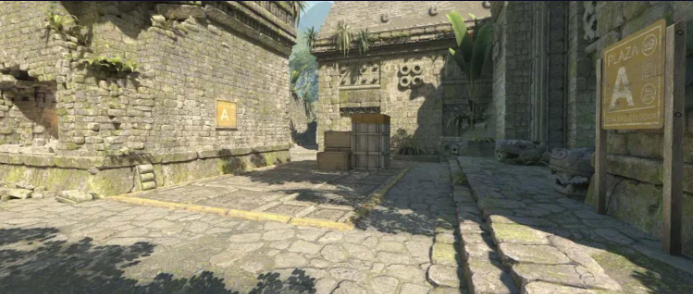
A Site
- Plant location near Default or Close Corner.
- Key CT angles: Nest, Tree, Close A.
- T approaches: A Main, Ruins.
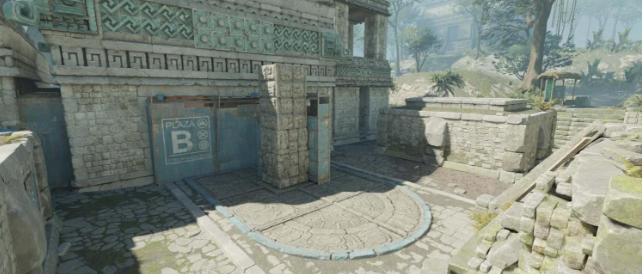
B Site
- Plant location near Default or B Back.
- Key CT angles: Bridge, Cave, B Main.
- T approaches: B Main, Banana / Cave.
Pairing callouts with good aim is crucial. Check out our CS2 aim training map guide to improve precision at key angles.
Key Strategies Using Callouts
- Quick Rotations: Using accurate callouts lets teammates rotate faster.
- Utility Coordination: Smokes, flashes, and molotovs can be preemptively used if a player calls out enemy positions.
- Clutch Awareness: Callouts like “One in Nest” can save rounds in 1vX situations.
- Practice with Demos: Reviewing replays in your CS2 demo folder helps identify where players miss callouts.
- Cross-Map Knowledge: Comparing strategies from other maps like Train or Nuke improves overall game sense.
Tips for Practicing Callouts
- Start Slow: Focus on learning T-side or CT-side first.
- Use Replays: Check how to fast-forward CS2 replays to study callouts in action.
- Team Practice: Run scrims where only callouts are allowed for communication.
- Stay Comfortable: Long sessions require proper setup; see why hands get cold while gaming tips to stay focused.
Frequently Asked Question (FAQs)
1. What are Ancient callouts in CS2?
Ancient callouts are specific names for areas, pathways, and positions on the Ancient map. They help teammates communicate enemy locations quickly for better rotations and strategy.
2. Why are callouts important in CS2?
Callouts improve team coordination, allow faster rotations, and help you make smarter utility plays. Knowing them can be the difference between winning or losing rounds.
3. What are the main bomb sites on Ancient?
- A Site: Features central plant spots and close entrances.
- B Site: Compact with multiple vertical angles and flanking routes.
Knowing callouts for each site helps coordinate attacks and defenses effectively.
4. What is the best way to learn Ancient callouts?
- Practice in-game and communicate them with your team.
- Use CS2 demo folder to review rounds.
- Compare strategies with other maps like Train or Nuke.
5. How can I improve my map awareness on Ancient?
- Watch professional matches or demos.
- Pair callouts with utility placement.
- Train aim at common angles using CS2 aim training maps.
Final Thoughts
Mastering Ancient callouts CS2 is more than memorizing names—it’s about improving team communication, rotations, and map awareness. Pair this knowledge with other maps and guides to dominate competitive play.